$39.76
$72.36
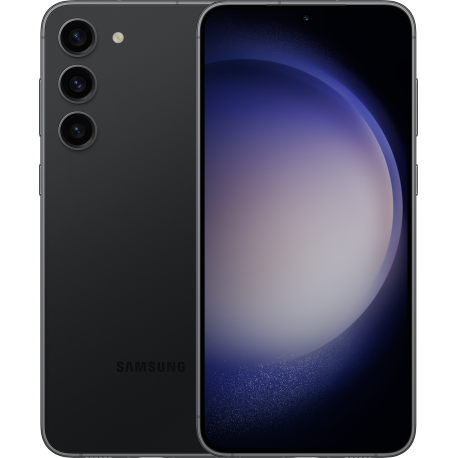
In the fiercely competitive arena of smartphones, the segment that witnesses the most brutal battles is the budget-to-mid-range category. Here, consumers demand not just affordability, but a no-compromise experience—decent performance, good cameras, long battery life, and a display that delights. For years, Samsung’s Galaxy M series has been a torchbearer in this space, striking a delicate balance between cost and capability. Models like the M51 (famed for its 7000mAh battery) and the M55 (with its 50MP selfie camera) have carved distinct identities. If we follow Samsung’s alphanumeric nomenclature, the Galaxy M17 would logically succeed the Galaxy M16. Based on the company’s trajectory of aggressively trickling down premium features, a hypothetical M17 wouldn’t be just an incremental update; it would be a statement. It would represent the culmination of Samsung’s mission to democratize technology. This speculative analysis posits the Galaxy M17 as the device that finally blurs the line between the mid-range and the premium segment, incorporating features once thought exclusive to flagships. Chapter 1: Design & Build – A Symphony of Form and Function Samsung’s design language has evolved towards minimalism and elegance. The hypothetical M17 would likely embrace this fully. Philosophy and Materials: Moving away from glossy, fingerprint-prone plastic backs, the M17 could introduce a “Glastic” finish of higher quality—a polycarbonate material engineered to mimic the frosted matte texture of glass. It would feel premium in the hand, resist smudges, and offer a secure grip. The frame would remain polycarbonate but with a metallic coating and finish for a seamless look. Form Factor: Despite housing a large battery, Samsung’s expertise would keep the profile surprisingly slim (around 8.5mm) and the weight manageable (approx. 195g). The curvature of the back panel would ergonomically mold to the palm. Color Palette: Moving beyond safe options, the M17 could offer sophisticated, nature-inspired colors: Forest Green (a deep, matte green), Sunset Copper (a radiant, gradient orange-pink), Astral Black (with subtle star-like speckles), and Arctic Blue (a cool, serene light blue). Practical Touches: Crucially, it would retain the 3.5mm headphone jack, a beloved feature in this segment, and would feature a dedicated side-mounted fingerprint sensor integrated into the power button, known for its speed and reliability. The bottom would house the USB Type-C port and a speaker grille. IP67 dust and water resistance, a rarity in this price bracket, could be its crowning design achievement, offering peace of mind against spills and rain. Chapter 2: The Canvas – A Display That Steals the Show The display is the primary interface, and here, the M17 would make its biggest generational leap. Panel Technology: The M16 used a Super AMOLED display. The M17 would not only continue this but enhance it. We would see a 6.7-inch Super AMOLED panel with a peak brightness of 1200 nits, making it perfectly usable under direct sunlight. The Game-Changer: Refresh Rate: While 90Hz is becoming standard, the M17 could shatter expectations by introducing a 120Hz adaptive refresh rate. This would mean buttery-smooth scrolling in social media feeds, flawless animation in UI, and a competitive edge in fast-paced games. The “adaptive” part is key—the display would intelligently switch between 60Hz, 90Hz, and 120Hz based on content to save battery. Resolution and Quality: A Full HD (2400 x 1080 pixels) resolution would ensure crisp detail. It would support HDR10 content, bringing vibrant contrast and color to supported videos on YouTube and Netflix. The bezels would be minimized, with a sleek U-shaped notch (or possibly a tiny center punch-hole) for the front camera, maximizing screen real estate. Durability: The display would be protected by the latest Corning Gorilla Glass 5 (or Victus if Samsung is feeling generous), offering scratch and drop resistance. Chapter 3: The Brain & Brawn – Performance and Internals This is where the rubber meets the road. The hypothetical M17 would need a chipset that balances efficiency with capable performance. Chipset: The most plausible engine would be Samsung’s own Exynos 1480. Built on a 4nm process, it would offer significant gains in power efficiency and CPU/GPU performance over its predecessor. An alternative could be a Qualcomm Snapdragon 7s Gen 2, which would also be a potent option. Both chipsets are capable of handling everyday tasks, heavy multi-tabbing, and popular mobile games like COD: Mobile and Genshin Impact at medium-to-high settings. Memory Configurations: To cater to diverse users, the M17 would launch in multiple RAM and storage variants: 6GB/128GB, 8GB/256GB, and potentially a top-tier 12GB/512GB model, appealing to power users and those who store extensive media. The storage would be UFS 3.1 type, ensuring fast app launches and file transfers. Crucially, it would support microSD card expansion up to 1TB. Cooling System: To sustain performance during long gaming sessions or video recording, it would incorporate an enhanced vapor chamber cooling system, dissipating heat effectively to prevent thermal throttling. Benchmark Expectations: In a synthetic benchmark like AnTuTu v10, the M17 could realistically score between 550,000 to 650,000 points, placing it firmly in the upper mid-range category. Chapter 4: The Photographic Eye – A Versatile Camera System Camera performance is a key purchase driver. The M17 would need a versatile, not just megapixel-heavy, setup. Rear Camera Array: Primary Sensor (The Headliner): A groundbreaking 108MP Samsung ISOCELL HM6 sensor with large pixels (0.8µm, 1.92µm with 9-in-1 pixel binning) and Optical Image Stabilization (OIS). This would be the star, capturing stunning detail in daylight and combining pixels for brighter, cleaner low-light shots. OIS would ensure stable videos and sharper handheld night photos. Ultra-Wide Sensor: An 8MP sensor with a 123-degree field of view, perfect for landscapes, architecture, and group shots. Macro Sensor: A 5MP dedicated macro camera for close-up shots of textures, flowers, and small objects. Depth Sensor: A 2MP depth sensor to assist in precise portrait mode bokeh effects. Front Camera: For selfies and video calls, a 32MP sensor with advanced pixel binning would be housed in the display notch. It would support 4K video recording and offer a suite of beauty and portrait modes. Software & Features: The camera app would be feature-rich, leveraging Samsung’s expertise. Key modes would include: Expert RAW & Pro Mode: For manual control over photography. Enhanced Nightography: A dedicated low-light mode leveraging the primary sensor’s capabilities. Single Take 2.0: Capturing multiple photos and video clips with one shutter press. Fun Mode, Super Slow-Mo (1080p@480fps), and Food Mode. Video Capabilities: The rear system could record up to 4K video at 30fps (with EIS and OIS), and 1080p at 60fps. The front camera would support 4K@30fps. Chapter 5: The Marathon Runner – Battery and Charging Battery life is the bedrock of the M series identity. Capacity: The M17 would likely house a monstrous 6000mAh battery, a staple for the series. Combined with the efficient 4nm chipset and the adaptive refresh rate display, this would translate to phenomenal endurance. Projected Usage: Up to 14-16 hours of screen-on-time, over 2 days of moderate use, or days of standby. Charging Technology: While the battery is large, charging speed must keep up. The M17 could finally bring 45W Super Fast Charging to its price point. This would mean a 0-50% charge in about 30 minutes and a full charge in roughly 75-80 minutes—incredible for a 6000mAh unit. Notably, the charger might be included in the box in some regions. Power Management: Software features like Adaptive Battery and Power Saving Modes would further optimize usage, learning app patterns to limit background drain. Chapter 6: The Soul – Software and User Experience Hardware is nothing without intuitive software. Operating System: The hypothetical M17 would launch with Android 15 out of the box, overlaid with Samsung’s One UI 7.0. Update Promise: In a monumental move, it would be guaranteed 4 generations of major Android OS upgrades and 5 years of security patches. This would be its killer software feature, promising longevity and support into 2029, an unprecedented commitment in the mid-range. One UI Experience: The interface would be clean, customizable, and feature-packed without being bloated. Key inclusions would be Samsung Knox security, Secure Folder, Link to Windows integration, Multi-Window support, and a wide array of Good Lock modules for deep customization. Ecosystem Integration: It would work seamlessly with Samsung’s ecosystem—Galaxy Buds, Watches, and Tabs—for features like auto-switch and shared clipboard. Chapter 7: The Audio and Connectivity Suite Audio: A stereo speaker setup (bottom-firing earpiece) tuned by Dolby Atmos would provide an immersive, spatial audio experience for media consumption. The 3.5mm jack would offer high-quality audio for wired headphones. Connectivity: It would be a 5G-capable device (supporting key bands globally), with Wi-Fi 6, Bluetooth 5.3, NFC for Samsung Pay, and GPS with multiple constellation support. Chapter 8: Market Position and Conclusion – The Value Champion Positioned in the ₹20,000 to ₹25,000 ($240-$300) price bracket in markets like India, and similarly competitive in Southeast Asia, Latin America, and Europe, the hypothetical Galaxy M17 would face off against the likes of the Nothing Phone (2a), Redmi Note 13 Pro , and realme 11 Pro . Its projected strengths would be its unbeatable combination: a 120Hz AMOLED display, a 108MP OIS camera, a 6000mAh battery with 45W charging, and an unparalleled 4 5 year software promise. It wouldn’t be the absolute best in any one category (a competitor might have a faster chip or faster charging), but it would offer the most complete, balanced, and future-proof package. Conclusion: The Samsung Galaxy M17, as envisioned here, is more than a smartphone; it is a thesis on the future of accessible technology. It demonstrates that a budget-friendly device no longer means making painful compromises. By strategically incorporating flagship-level features—a sublime display, a serious camera system, enduring battery life, and long-term software support—into a well-designed and accessible package, this hypothetical device would set a new benchmark. It wouldn’t just be a phone you buy because it’s affordable; it would be a phone you desire for its holistic excellence, truly embodying Samsung’s philosophy of “Innovation for All.” While the Galaxy M17 remains a product of informed speculation today, it represents the exciting and inevitable direction in which the value smartphone segment is decisively headed. Category: Samsung
Samsung